Blog

  • EPFO Wage Ceiling 2026: New PF Limit ₹25,000 Explained

    EPFO Wage Ceiling 2026: New PF Limit ₹25,000 Explained

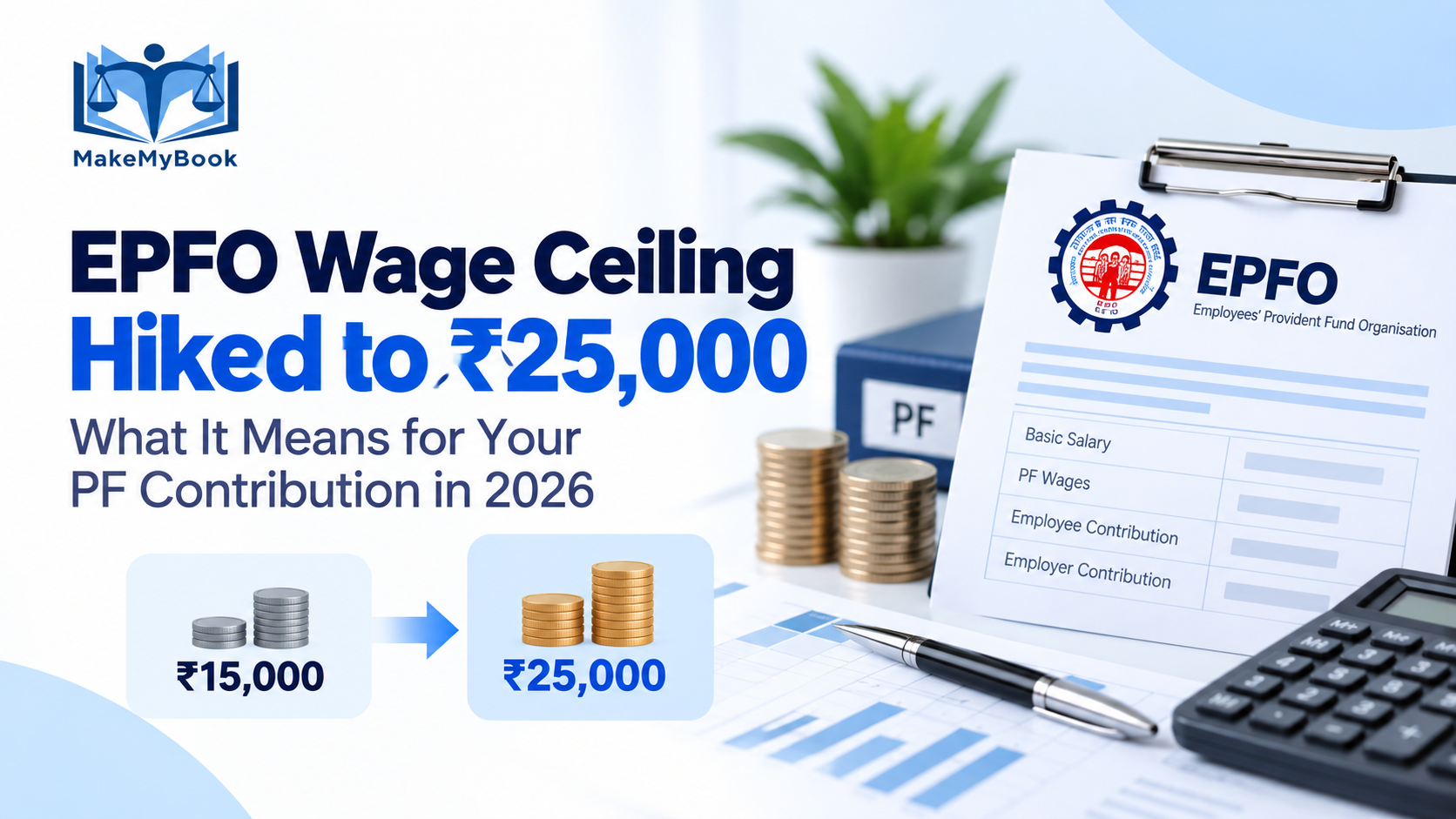
    The EPFO wage ceiling 2026 update is official — the Government has raised the PF wage ceiling from ₹15,000 to ₹25,000 per month, effective 17 September 2026. This is the first revision in over a decade, and it directly affects how EPF, EPS and EDLI coverage applies to employees across India.

    According to the Government, the revised ceiling is expected to bring over 51 lakh additional employees under mandatory EPFO coverage.


    EPFO Wage Ceiling 2026 — What Changed

    ParticularEarlierNew
    EPFO wage ceiling₹15,000/month₹25,000/month
    Effective date—17 September 2026
    Additional employees covered—51 lakh+
    Employee PF contribution at ceiling—Up to ₹3,000/month (12%)

    Who Does EPFO Wage Ceiling 2026 Affect?

    The change is most relevant for employees whose PF wages fall between ₹15,001 and ₹25,000 per month. Previously, this group could fall outside mandatory EPFO coverage. With the revised ceiling, eligible employees in this bracket now come under mandatory PF, subject to applicable EPF Scheme provisions.

    How PF Contribution Is Calculated Now

    Employee EPF contribution is calculated at 12% of applicable PF wages. For example, if applicable PF wage is ₹25,000:

    ₹25,000 × 12% = ₹3,000/month

    Over a year, that’s ₹36,000 going into the employee’s PF account — up from a lower base under the old ₹15,000 ceiling. Note: this is illustrative — actual deduction depends on individual salary structure and applicable PF wages.

    Will Take-Home Salary Be Affected?

    Possibly, yes. If PF contribution increases because the applicable wage base is now higher, the amount deducted monthly may also rise — meaning a marginally lower take-home salary, but higher long-term retirement savings through EPF/EPS.

    What EPS and EDLI Cover

    Beyond basic PF savings, eligible employees also get:

    • EPS (Employees’ Pension Scheme) — pension-related benefits
    • EDLI (Employees’ Deposit Linked Insurance) — insurance-linked protection

    The wage ceiling hike extends these benefits to a larger pool of employees.

    What Employers Need to Do

    Employers should review payroll and PF-compliance processes in light of the revised ceiling — update payroll systems, recheck employee eligibility, and ensure PF wage configurations reflect ₹25,000 from 17 September 2026 onward. This is exactly the kind of mid-cycle compliance change that catches businesses off guard if payroll isn’t actively managed.

    If you’re unsure whether your payroll setup already reflects this change, our payroll management and PF/ESI compliance service handles exactly this kind of update — so you’re not manually tracking every EPFO notification yourself.

    What Employees Should Check

    • PF wages on your latest salary slip
    • Employee and employer PF contribution amounts
    • UAN details and EPF passbook entries


    Payroll compliance changes like this happen more often than most businesses track. If you’d rather have your PF, ESI and payroll compliance monitored for you, talk to our team — we’ll make sure your payroll reflects every regulatory update, including this one. The EPFO wage ceiling 2026 update is one of the most significant payroll compliance changes in over a decade
    Source: Cabinet decision dated 16 September 2026, Ministry of Labour & Employment (Notification S.O. 5109(E), effective 17 September 2026).

    EPFO wage ceiling 2026 increased from ₹15,000 to ₹25,000
    New PF wage ceiling effective 17 September 2026
  • ITR Filing Checklist — Documents You Need Before You File

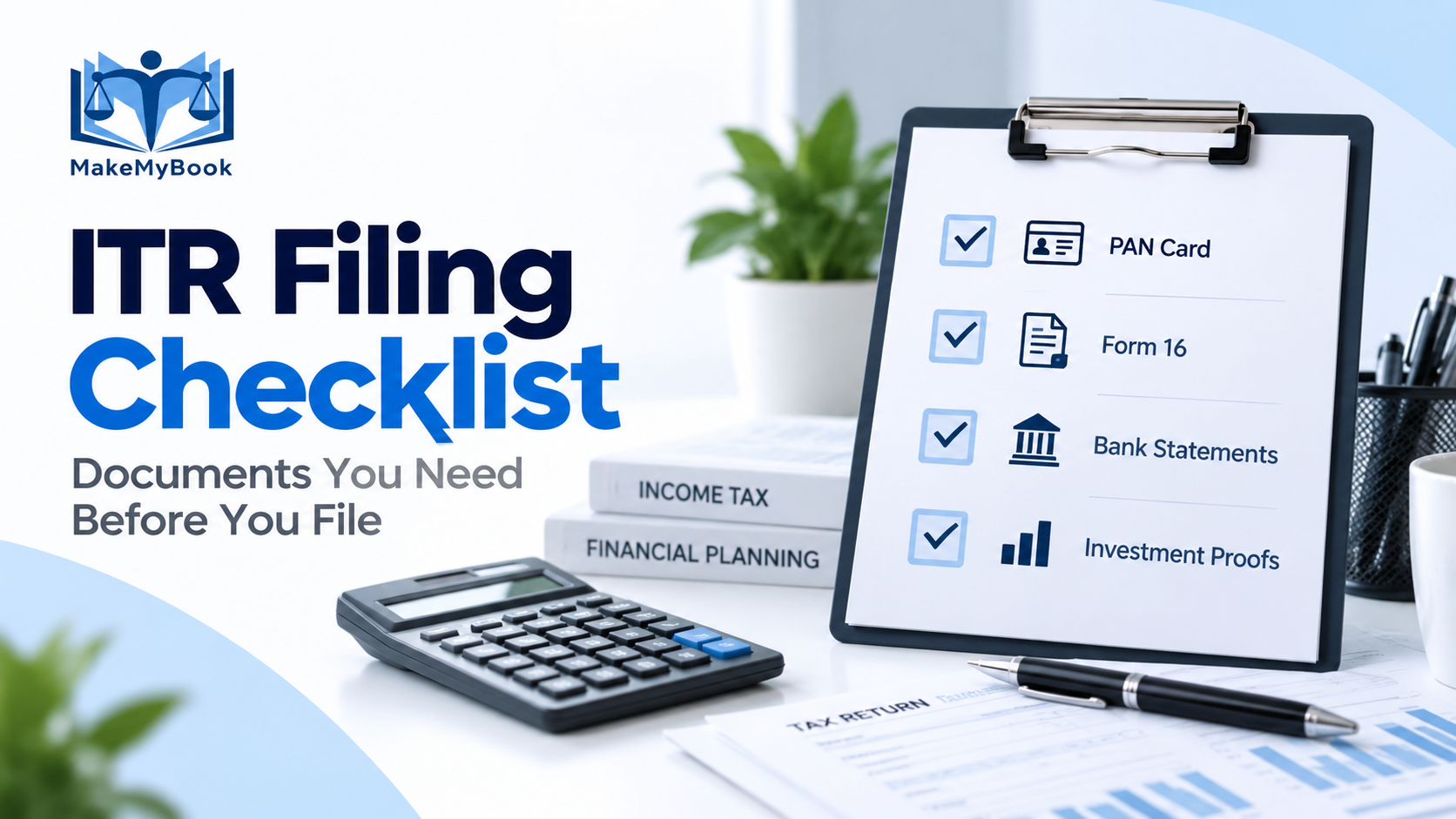
    ITR Filing Checklist — Documents You Need Before You File

    Every filing season, the same pattern repeats: people start their ITR filing, realize halfway through that they’re missing a document, and either delay filing or submit something incomplete. Filing gets slow and error-prone when documents are gathered at the last minute instead of ahead of time. Here’s a checklist broken down by income type, so you know exactly what to have ready before you sit down to file — or before you send documents to your consultant.

    For Salaried Individuals

    • Form 16 from your employer — this summarizes your salary, TDS deducted, and any exemptions already accounted for
    • Salary slips for the financial year, useful for cross-checking Form 16 figures
    • Bank interest certificates from every savings account and fixed deposit you hold
    • Investment proofs for deductions under Section 80C (PPF, ELSS, life insurance) and 80D (health insurance premiums)
    • Form 26AS / Annual Information Statement (AIS) — download this from the income tax e-filing portal to cross-check TDS actually deposited against what your employer reported

    For Freelancers and Professionals

    • Bank statements for the full financial year, across all accounts used for business income
    • TDS certificates (Form 16A) from clients who deducted tax at source on your payments
    • Form 26AS/AIS to verify all TDS entries match what clients have actually deposited
    • Expense records — anything you’re claiming as a business expense needs supporting invoices or receipts
    • GST returns, if you’re GST-registered, since your reported turnover should align across both filings

    For Business Owners

    • Profit & Loss statement and Balance Sheet for the financial year
    • GST returns filed through the year, for reconciliation against reported turnover
    • TDS certificates for any tax deducted on payments received or paid
    • Loan and interest statements, especially for business loans where interest is a deductible expense
    • Depreciation schedule for any business assets, if not already maintained by your accountant

    Documents Everyone Needs, Regardless of Income Type

    • PAN card
    • Aadhaar card (linked to PAN, as required)
    • Bank account details for the account where you want any refund credited
    • Last year’s ITR, purely for reference — helps catch anything that changed or was missed

    A Few Things Worth Double-Checking Before You File

    Beyond just gathering documents, it’s worth verifying a couple of things that commonly cause delays or notices later. First, make sure your Form 26AS/AIS actually matches what you’re reporting — discrepancies here are one of the most common triggers for a follow-up notice from the department. Second, if you’ve changed jobs during the year, make sure you have Form 16 from every employer, not just your most recent one, since combined income determines your tax slab.

    If you have income you’re unsure how to classify — say, a freelance side income alongside a salaried job, or capital gains from investments — it’s worth getting a second opinion before filing rather than after. Our ITR filing service handles exactly these mixed-income situations regularly, and we’ll flag anything that needs clarification before submission, not after a notice shows up.

    Getting Ready in Advance Pays Off

    Most of the stress around ITR filing comes from starting the process too close to the deadline. Getting these documents ready in advance usually cuts filing time in half, and gives you room to actually think through deductions and exemptions instead of rushing to hit the due date. Check our GST & ITR due dates page for the current filing deadlines, or get help filing your ITR if you’d rather hand the whole process to someone else.

    ITR Filing Checklist
  • Common GST Filing Mistakes Small Businesses Make

    Common GST Filing Mistakes Small Businesses Make

    Most GST notices we see aren’t from fraud — they’re from small, avoidable mistakes that pile up over a few filing cycles until the department flags them. If you’re managing GST yourself, or even if you have someone handling it part-time, these are the five errors we run into most often when we take over a new client’s compliance.

    1. Mismatched GSTR-1 and GSTR-3B Figures

    Your GSTR-1 reports outward supplies in detail, while GSTR-3B is a summary return with tax payment. When the total outward supply figure in your GSTR-3B doesn’t match what you’ve reported in GSTR-1 for the same period, the system flags it automatically. This usually happens when businesses update sales records after filing GSTR-1 but forget to reflect the same numbers in GSTR-3B, or when different people handle the two returns without cross-checking.

    The fix is simple in theory — reconcile both returns before submission, every single month — but in practice, this is exactly the kind of task that gets skipped when you’re busy running the actual business. Our GST return filing service builds this reconciliation into every filing cycle so mismatches don’t happen in the first place.

    2. Claiming ITC Without GSTR-2B Reconciliation

    Input Tax Credit (ITC) is one of the biggest sources of GST notices. Since the introduction of GSTR-2B, your ITC claim is supposed to match what your vendors have reported in their own returns. If a vendor hasn’t filed on time, or has filed incorrectly, your credit claim can get blocked or reversed — even though you paid the GST correctly on your end.

    This is frustrating because it’s often not your mistake at all, but you still bear the consequence. Rule 36(4) under the CGST Rules restricts ITC claims to what appears in GSTR-2B, so reconciling before you file — not after a notice arrives — is the only real protection.

    3. Missing E-Way Bills on Eligible Transactions

    Any movement of goods above the prescribed value threshold requires an e-way bill, regardless of whether it’s a sale, a stock transfer, or even a return. Businesses that deal with physical goods — traders, manufacturers, e-commerce sellers — often miss this on smaller or “routine” shipments, assuming it doesn’t apply. It does, and the penalty for goods in transit without a valid e-way bill can be steep, sometimes leading to detention of the goods themselves.

    If your business regularly moves inventory, this needs to be baked into your dispatch process, not treated as an afterthought.

    4. Wrong HSN/SAC Codes

    Every product and service under GST is classified under an HSN (goods) or SAC (services) code, which determines the applicable tax rate. Using the wrong code — even unintentionally — can mean you’ve been charging or paying the wrong rate of tax for months before anyone notices. It also flags your return for review if your reported code doesn’t align with what similar businesses in your category typically use.

    This is especially common for businesses that sell a mix of products across categories, or that have expanded their product range without updating their billing software’s default codes.

    5. Filing NIL Returns Late

    Even in a month where you’ve had zero sales or zero purchases, you’re still required to file a NIL return by the due date. A lot of businesses assume that “nothing to report” means “nothing to file,” but the GST portal doesn’t see it that way — late fees apply exactly the same as they would for a return with actual transactions.

    This is one of the easiest mistakes to avoid, and also one of the most common, because it’s easy to deprioritize a filing you assume doesn’t matter.

    Building a Habit That Prevents All Five

    Every mistake on this list traces back to the same root cause: reconciliation happening too late, or not at all. A monthly reconciliation habit — checking GSTR-1 against GSTR-3B, checking ITC against GSTR-2B, verifying HSN codes, confirming e-way bills for the month — catches almost all of these before they become a notice.

    If you’d rather not track this yourself every month, check our GST & ITR due dates page to see what’s coming up, or talk to our team about taking GST compliance off your plate entirely.